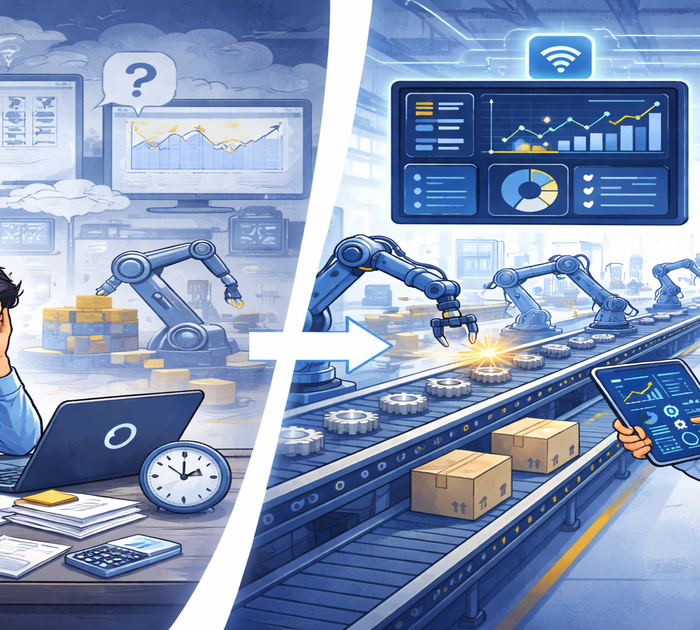


Manufacturers today face a growing challenge: customers want personalization, faster delivery, and competitive pricing—often all at once. While standard products remain essential for efficiency, custom orders are becoming the differentiator that wins business. However, without the right systems in place, customization can quickly lead to production delays, data confusion, and rising costs.
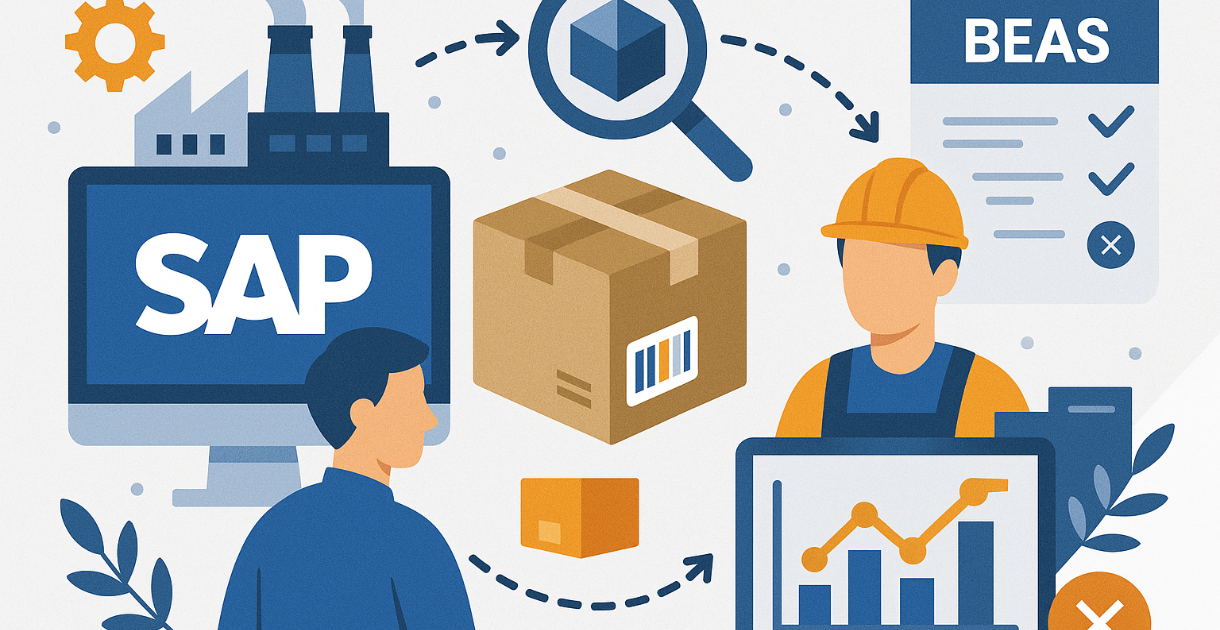
This is where BEAS Manufacturing, fully integrated with SAP Business One, transforms complexity into control. BEAS allows manufacturers to move seamlessly from standard production to custom manufacturing—without losing structure, visibility, or efficiency.
The Challenge of Custom Manufacturing
Traditional manufacturing systems are designed for repetition and predictability. Standard products are easy to plan, price, and produce. Custom orders, on the other hand, introduce variability in:
Bills of materials (BOMs)
Routing and production steps
Lead times and resource planning
Cost calculation and pricing
Quality control requirements
Without a flexible manufacturing system, companies often rely on spreadsheets, manual workarounds, or disconnected tools. As a result, errors increase, planning becomes unreliable, and production teams lose confidence.
BEAS: Built for Flexibility, Not Workarounds
BEAS Manufacturing is designed to support both make-to-stock and make-to-order strategies within the same environment. Instead of forcing manufacturers to choose between efficiency and flexibility, BEAS enables both.
With BEAS, companies can:
Maintain standard product structures
Create customer-specific variants
Adjust materials, operations, and costs dynamically
Track each custom order without breaking standard workflows
This balance allows manufacturers to scale customization without chaos.
Dynamic BOMs and Routings
One of BEAS’s strongest capabilities is its ability to manage dynamic bills of materials and routings. While standard BOMs define the base product, BEAS allows manufacturers to modify components, quantities, and operations for individual customer orders.
For example:
A standard machine can be customized with different motors, sizes, or finishes
A base product can include optional components or accessories
Production steps can be added or skipped depending on the configuration
All changes are tracked and linked directly to the production order, ensuring clarity and traceability.
Accurate Planning and Scheduling
Customization often fails because planning systems cannot adapt quickly enough. BEAS solves this by providing real-time production planning that adjusts automatically when changes occur.
When a custom order is confirmed:
Material requirements are recalculated
Capacity planning is updated
Lead times adjust based on real availability
Shop floor priorities are aligned
This allows planners to make informed decisions and avoid overloading resources. As a result, delivery promises become realistic, not risky.
Cost Control Without Guesswork
Custom manufacturing can easily erode margins if costs are not tracked correctly. BEAS provides precise cost calculation at every stage of production.
Manufacturers can:
Estimate costs before production begins
Track actual material, labor, and machine costs
Compare planned vs. actual performance
Adjust pricing for future custom orders
Because BEAS integrates tightly with SAP Business One, financial data flows automatically—eliminating manual reconciliation and improving margin visibility.
Shop Floor Visibility and Control
On the production floor, clarity is critical. BEAS offers intuitive shop floor interfaces that guide operators through custom workflows.
Operators can:
See order-specific instructions
Scan materials and record consumption
Log time and machine usage
Capture quality checks
This ensures that even complex custom orders are executed correctly and consistently. At the same time, managers gain real-time visibility into progress and potential bottlenecks.
Traceability and Quality Assurance
Customization increases the risk of quality issues if data is not managed carefully. BEAS maintains full traceability by linking materials, operations, and quality checks to each order.
If a problem arises, manufacturers can quickly:
Identify affected orders
Trace materials and components
Analyze root causes
Take corrective action
This level of traceability is especially important for regulated industries and high-value products.
Scaling Customization Without Losing Control
The true value of BEAS lies in its scalability. As demand for custom products grows, BEAS ensures that complexity does not overwhelm the organization.
Instead of creating chaos, BEAS creates structure:
Standard processes remain intact
Custom variations are controlled and documented
Data stays accurate across systems
Teams collaborate with confidence
Manufacturers can grow their custom offerings while maintaining operational stability.
Conclusion
Customization does not have to mean complexity. With BEAS Manufacturing and SAP Business One, manufacturers can confidently move from standard products to custom orders—without sacrificing efficiency, control, or profitability.
By enabling flexible BOMs, real-time planning, accurate costing, and shop floor visibility, BEAS turns customization into a competitive advantage rather than an operational risk.
BEAS enables dynamic BOMs, flexible routings, real-time planning, and accurate costing, allowing manufacturers to manage custom orders within standard production workflows.
Yes. BEAS supports make-to-stock and make-to-order strategies simultaneously, giving manufacturers flexibility without disrupting core processes.
BEAS provides control, visibility, and traceability, ensuring custom orders are produced efficiently, accurately, and profitably.