

ERP continuity services are often the missing piece between a successful implementation and a successful long-term operation. Many companies invest significant time, effort, and resources into deploying an ERP system. However, once the go-live celebration ends, a new challenge begins: keeping the system stable, secure, optimized, and aligned with business growth.
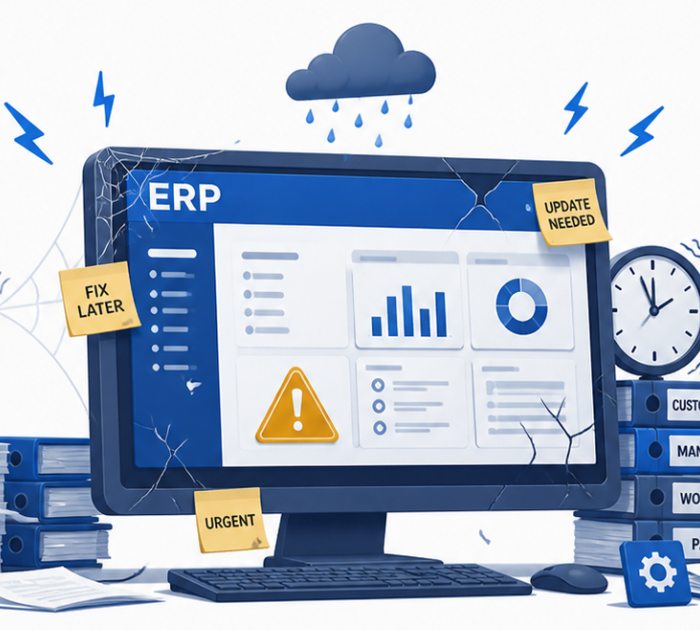
Unfortunately, many organizations assume their ERP will continue running smoothly without ongoing attention. As a result, performance issues emerge, customizations break, upgrades become risky, and users gradually lose confidence in the system.
This is precisely why ERP continuity services matter.
By providing structured technical support, database management, system assessments, upgrade assistance, and customization maintenance, organizations can protect their ERP investment while ensuring long-term operational success.
Why ERP Continuity Services Matter After Go-Live
An ERP system is not a one-time project. Instead, it is a living business platform that evolves alongside your company.
As your organization grows, several factors change:
- Data volumes increase
- New users are added
- Processes evolve
- Integrations expand
- Reporting requirements become more complex
Consequently, the ERP environment requires continuous attention.
Without ERP continuity services, small issues can gradually become operational risks. Moreover, teams often resort to spreadsheets and manual workarounds when confidence in the system declines.
Therefore, maintaining a healthy ERP environment requires proactive support rather than reactive fixes.
Keeping Your ERP Environment Stable
System stability is one of the most important outcomes of ERP continuity services.
While users focus on daily transactions, technical teams must monitor the infrastructure supporting those activities. For example, databases require maintenance, backups must be validated, and system performance needs regular review.
ERP continuity services help organizations:
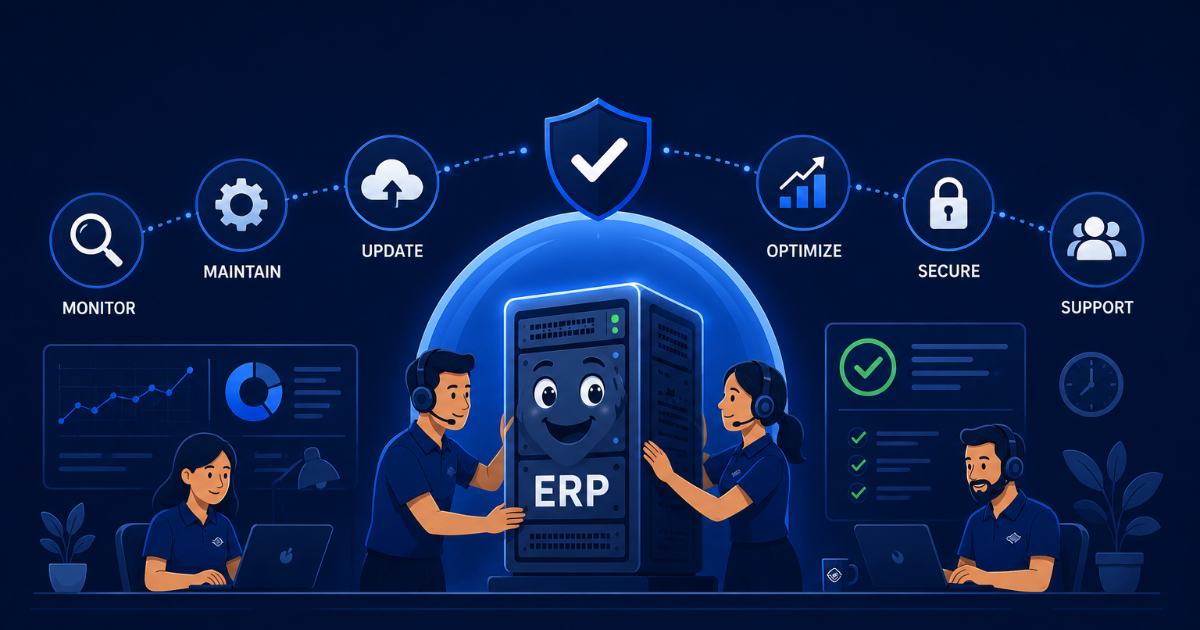
- Monitor system health
- Identify performance bottlenecks
- Verify successful backups
- Validate database integrity
- Reduce unexpected downtime
As a result, companies gain confidence that their ERP system can support daily operations without disruption.
Beyond Support: Proactive System Management
Many businesses think of support as simply fixing problems. However, modern ERP continuity services go much further.
Rather than waiting for failures, managed support focuses on prevention.
For instance:
- Infrastructure assessments verify system readiness
- Health checks identify potential issues early
- Upgrades keep systems current
- Monitoring detects unusual behavior
Consequently, organizations spend less time troubleshooting and more time focusing on business growth.
Furthermore, proactive management helps prevent costly disruptions before they affect users.
Supporting SAP Business One and Critical Add-Ons
Most ERP environments extend beyond the core system. In addition to SAP Business One, organizations often rely on manufacturing, warehouse, reporting, and productivity solutions.
ERP continuity services ensure that these connected technologies continue functioning together effectively.
This support may include:
- SAP Business One
- BEAS Manufacturing
- Produmex WMS
- Boyum B1UP
- Boyum Print & Delivery
- Custom developments
- Validated reports and integrations
Because all supported systems are managed within a structured framework, organizations avoid fragmented support experiences.
As a result, issues are resolved faster and system reliability improves.
Protecting Customizations and Business Processes
Customizations are often essential to business operations. However, they can also introduce risk if not maintained properly.
ERP continuity services help protect supported customizations by:
- Assessing reported issues
- Diagnosing root causes
- Restoring known stable versions
- Repairing validated code when necessary
Therefore, businesses avoid unnecessary downtime and maintain critical functionality.
Moreover, structured customization support ensures that future upgrades do not compromise business operations.
Database Management That Protects Your Business
Data is one of the most valuable assets inside any ERP system. Consequently, database management is a critical component of ERP continuity services.
A well-managed database environment includes:
- Backup verification
- Restoration testing
- Integrity checks
- Performance monitoring
- Storage and resource reviews
In addition, proactive database management helps identify issues before they affect users.
As a result, organizations reduce risk while improving reliability.
A Complete Team Supporting Your ERP
One of the greatest benefits of ERP continuity services is access to a structured operational team.
Rather than relying on a single resource, organizations benefit from:
- Technical consultants
- Development specialists
- Functional consultants
- Project management oversight
Because each role focuses on specific responsibilities, support becomes more efficient and predictable.
Furthermore, this team-based approach ensures that technical, operational, and strategic concerns are addressed consistently.
The Bottom Line
Going live is only the beginning of your ERP journey.
Without ongoing support, even the best ERP implementation can lose value over time. However, with ERP continuity services, organizations gain the structure, expertise, and proactive management needed to keep systems performing at their best.
Ultimately, the goal is not simply to maintain an ERP—it is to ensure that it continues supporting business growth, operational efficiency, and long-term success.
ERP continuity services provide ongoing technical support, database management, system monitoring, upgrades, and customization maintenance to keep ERP systems operating effectively after go-live.
Companies need ERP continuity services because ERP systems evolve over time. Ongoing support helps maintain performance, reduce downtime, protect data, and ensure the system continues supporting business operations.
ERP continuity services help organizations maintain ERP stability, optimize performance, manage upgrades, protect customizations, and support business growth after go-live. Companies using SAP Business One, BEAS, or Produmex benefit from proactive monitoring, database management, and structured support that reduces operational risk while maximizing ERP value.