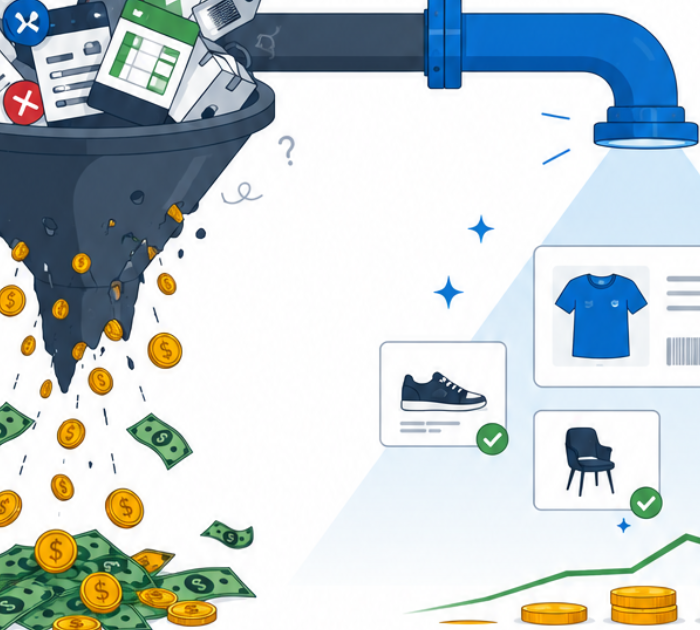



Product data is the backbone of modern business operations. It fuels ERP processes, powers eCommerce, supports sales teams, and ensures compliance across markets. Yet for many organizations, product data is also one of the most fragile parts of the business.
Errors creep in quietly. Information gets duplicated. Attributes go missing. Updates don’t sync. And by the time issues are visible, they’ve already impacted customers, operations, or revenue.
Understanding where product data breaks is the first step to fixing it—and this is where Perfion PIM makes a measurable difference.
Where Product Data Commonly Breaks
Most product data problems don’t come from a single failure. They emerge from disconnected processes and systems that weren’t designed to scale together.
Spreadsheets and manual handoffs are often the first breaking point. When product data is managed in files shared across teams, there’s no version control, no validation, and no accountability. A small change can easily overwrite critical information.
ERP systems, while essential, are not built to manage rich, multi-channel product content. They store core master data, but struggle with images, documents, translations, marketing descriptions, and complex attribute structures. Teams end up managing this information outside the ERP—creating silos.
Supplier-provided data introduces another layer of risk. Data arrives in different formats, with inconsistent naming, missing attributes, or outdated values. Without a structured intake and validation process, errors flow directly into internal systems.
Finally, multiple output channels—eCommerce platforms, marketplaces, catalogs, distributors, and partners—create pressure to copy and adapt data manually. Each copy increases the risk of inconsistency.
The Cost of Broken Product Data
When product data breaks, the impact goes far beyond inconvenience.
Sales teams lose confidence in product information. Marketing publishes incorrect content. Customers receive the wrong products or specifications. Compliance teams scramble to fix missing certifications. Operations waste time reconciling discrepancies across systems.
Most importantly, decision-making slows down because no one is sure which data is correct.
This is not a people problem—it’s a system problem.
Why Perfion Fixes the Root Cause
Perfion PIM addresses product data challenges at the source by creating a single, governed system of record for all product information.
Instead of spreading product data across spreadsheets, shared folders, ERP fields, and disconnected tools, Perfion centralizes everything in one structured environment. This includes technical attributes, marketing content, documents, images, variants, and translations.
By design, Perfion becomes the place where product data is created, enriched, validated, and approved—before it reaches ERP systems or external channels.
Built-In Structure and Validation
One of the key reasons product data breaks is lack of structure. Perfion solves this by enforcing standardized data models and attribute definitions.
Mandatory fields, controlled values, and validation rules ensure that incomplete or incorrect data cannot move forward. Issues are identified early, not after products are published or orders are placed.
This structure removes guesswork and dramatically reduces human error.
Controlled Workflows Create Accountability
Perfion introduces workflow-driven governance that clearly defines ownership of product data.
Teams know who is responsible for data creation, review, approval, and publication. Changes are logged, traceable, and auditable. Updates follow a controlled process instead of informal emails or file updates.
As a result, product data evolves in a disciplined way—even as product portfolios grow more complex.
Seamless Integration with ERP and Channels
Perfion does not replace ERP systems—it complements them.
Clean, approved product master data flows from Perfion into ERP platforms like SAP Business One, ensuring consistency across operations. At the same time, enriched content is distributed to eCommerce, marketplaces, catalogs, and partners—without duplication.
Each system receives exactly the data it needs, from the same trusted source.
Scaling Without Breaking Again
As companies grow, product data complexity increases. More SKUs, more variants, more markets, more languages, and more channels amplify the risk of errors.
Perfion is built to scale with this complexity. New attributes, categories, suppliers, and channels can be added without breaking existing structures. Product data remains consistent, searchable, and reliable—even as the business expands.
The Bottom Line
Product data doesn’t break because teams aren’t careful enough. It breaks because the tools and processes aren’t designed to manage complexity.
Perfion fixes product data by centralizing it, structuring it, validating it, and governing it from a single source of truth. The result is cleaner data, faster launches, stronger compliance, and better customer experiences.
When product data is fixed at the source, everything downstream works better.
Product data typically breaks across spreadsheets, ERP limitations, supplier inputs, and manual channel updates, leading to inconsistencies and errors.
Perfion centralizes product data, enforces structured attributes, applies validation rules, and governs updates through controlled workflows before data is distributed.
Yes. Perfion integrates with ERP platforms such as SAP Business One, ensuring clean, approved product data flows consistently across systems and channels.