


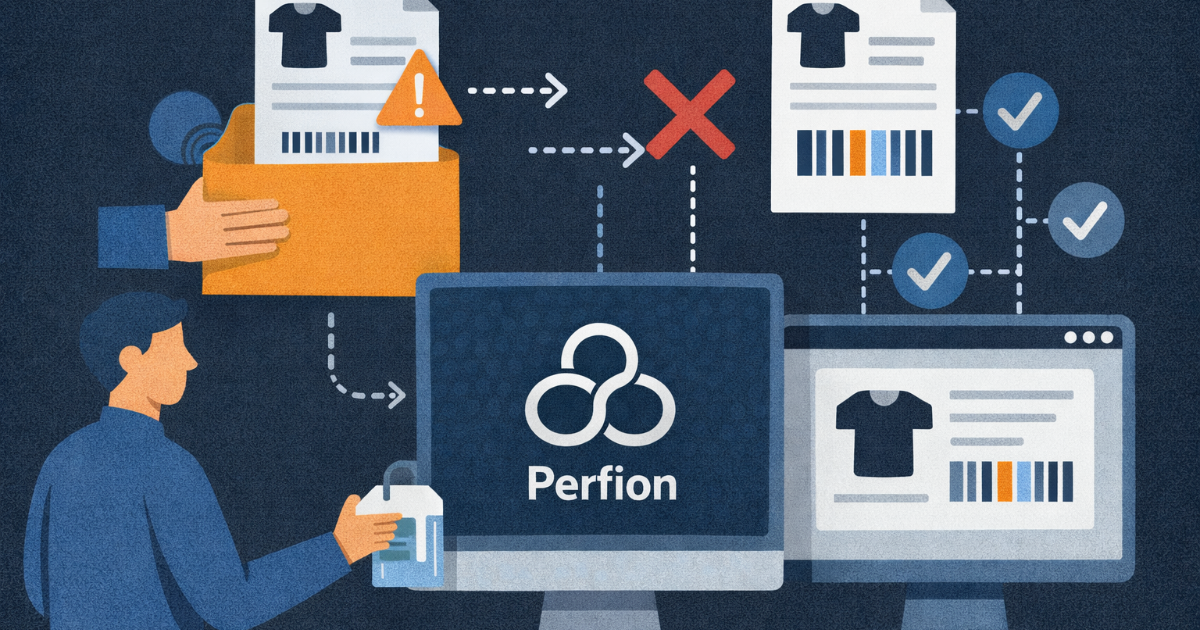
Supplier-provided product data creates one of the biggest challenges for manufacturers, distributors, and retailers today. In many cases, suppliers send incomplete, outdated, or inconsistent information. As a result, companies face wrong product listings, incorrect orders, compliance risks, and frustrated customers.
These problems rarely happen because suppliers act carelessly. Instead, they happen because product data comes from many sources and formats. For example, suppliers send spreadsheets, PDFs, emails, portals, and API feeds. Each source follows different rules, structures, and update cycles. Without control, errors quickly enter the business.
This is where Perfion PIM changes the game.
Why Supplier Data Errors Create Serious Problems
Once supplier data enters downstream systems, the impact grows fast. For instance, wrong dimensions can cause shipping issues. Missing attributes can block online sales. Outdated certifications can even create legal risks.
Moreover, incorrect data affects many teams at the same time. Sales teams may quote the wrong specifications. Marketing teams may publish incorrect content. Operations teams may struggle with inventory and logistics. Meanwhile, IT teams often spend hours fixing data instead of improving systems.
Many companies try to solve this by adding manual checks, emails, or spreadsheets. However, this approach usually increases confusion. Instead of reducing errors, it creates more versions of the truth.
Therefore, companies need a better approach—one that controls data before problems appear.
Centralizing Supplier Data with Perfion PIM
Perfion PIM provides a central place to collect, manage, and control all supplier-provided product data. Rather than sending data straight into ERP systems or sales channels, Perfion acts as a control layer.
First, teams import supplier data into the PIM. Then, they clean, enrich, and review it. Only after approval does the data move forward to ERP, eCommerce, catalogs, or marketplaces.
As a result, errors stop at the source instead of spreading across systems.
Standardization Removes Inconsistency
One of the main causes of supplier data errors is inconsistency. Different suppliers describe the same product in different ways. They use different units, names, or formats. Consequently, internal teams struggle to align everything.
Perfion solves this by enforcing clear standards. For example, it allows companies to define:
Standard attributes for each product type
Controlled values through dropdowns
Central unit conversions
Required fields by category
Because of this structure, all supplier data follows the same rules, no matter how it arrives. Therefore, internal systems receive clean and aligned information.
Validation Rules Catch Errors Early
In addition to standardization, Perfion PIM uses validation rules to prevent mistakes. These rules automatically check data before approval.
For example, Perfion can detect:
Missing required attributes
Invalid formats or values
Measurements outside allowed ranges
Incomplete product records
Missing translations
Instead of discovering errors after products go live, teams fix issues early. As a result, companies reduce rework, support tickets, and customer complaints.
Clear Workflows Create Accountability
Supplier data changes often. Prices update, certifications expire, and packaging details evolve. Without clear ownership, updates can slip through unnoticed.
Perfion introduces structured workflows that guide every update. For instance:
Changes require review and approval
Responsibilities are clearly assigned
All actions are logged and traceable
Only approved data gets published
Because of this, teams gain accountability and transparency. This approach proves especially valuable for regulated industries and complex product portfolios.
Faster Launches with Better Accuracy
Some companies believe governance slows things down. However, Perfion delivers the opposite result.
By removing manual fixes and confusion, teams work faster. They no longer chase suppliers, compare spreadsheets, or correct errors across systems. Instead, they rely on a single source of truth.
As a result, products move faster from supplier intake to ERP, eCommerce, and marketing channels—without sacrificing accuracy.
Seamless Integration with SAP and Other Systems
Perfion PIM integrates smoothly with SAP Business One and other ERP systems. Therefore, companies avoid duplicate entry and manual imports.
Clean, structured data flows directly into SAP for operations. At the same time, enriched content feeds eCommerce, catalogs, and marketplaces. All channels rely on the same trusted data source.
The Bottom Line
Supplier-provided product data does not have to be a risk.
With Perfion PIM, companies gain control, clarity, and confidence. Errors stop early. Data stays consistent. Teams move faster and smarter.
Ultimately, businesses reduce mistakes, improve compliance, launch products faster, and deliver better customer experiences—all powered by clean, governed product data.
Perfion PIM prevents errors by centralizing supplier data, enforcing standardized attributes, applying validation rules, and requiring approval workflows before data is published to ERP or sales channels.
Yes. Perfion PIM supports automated validation for required fields, formats, value ranges, units of measure, and completeness—catching errors before they impact downstream systems.
Yes. Perfion PIM integrates seamlessly with SAP systems, ensuring that only clean, approved, and structured supplier product data is transferred into SAP and connected platforms.