

In today’s fast-moving manufacturing world, supply chains are under more pressure than ever. Customers expect faster delivery, perfect order accuracy, and complete transparency—while manufacturers must handle rising costs, regulatory demands, and unpredictable disruptions. As a result, end-to-end traceability has become a strategic necessity.
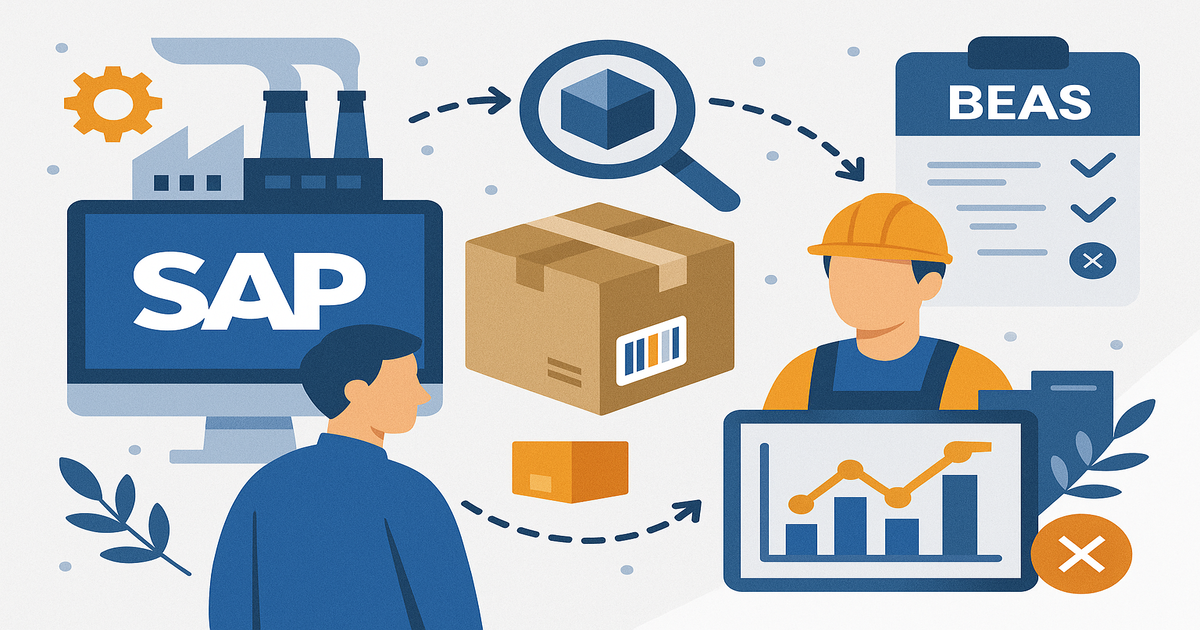
For companies running SAP Business One, the combined power of BEAS Manufacturing and Produmex provides a unified ecosystem where every material, production step, and shipment is documented, connected, and visible. This trio forms a traceability backbone that strengthens operations and reduces risk across the entire supply chain.
Let’s explore how these systems work together to create real-time, actionable traceability—from procurement to production to warehouse logistics and customer delivery.
1. Why End-to-End Traceability Matters More Today
Traceability is no longer just about compliance. Today, it drives:
Faster recalls and issue resolution
Higher product quality
Stronger customer trust
Accurate planning and inventory control
Visibility across every supply chain touchpoint
Manufacturers in industries such as food and beverage, pharmaceuticals, industrial machinery, automotive, and electronics face strict regulations that make traceability essential. End-to-end visibility helps companies prevent costly errors like mislabeling, incorrect batch usage, or incomplete documentation.
This is where SAP B1 + BEAS + Produmex deliver unmatched value.
2. SAP Business One: The Central Source of Truth
SAP Business One acts as the digital core of the supply chain. It connects purchasing, sales, finance, inventory, production orders, and quality control. When integrated with BEAS and Produmex, SAP B1 provides a central record for:
Item master data
Batches and serial numbers
Vendor and customer information
Inventory movements
Quality checks and compliance logs
Production and shipping documents
Every transaction—every receipt, issue, pick, and delivery—is captured in real time, creating the traceability foundation manufacturers need.
3. BEAS Manufacturing: Traceability Inside the Production Floor
While SAP Business One manages the business process, BEAS Manufacturing manages what happens on the shop floor.
BEAS enhances traceability through:
• Material Requirements & Batch Control
BEAS ensures only correct batches and materials are used during production. It validates raw materials against:
Bill of materials (BOMs)
Quality specifications
Expiration dates
Compliance requirements
Each usage is automatically logged.
• Real-Time Production Events
Every production step—from machine start to final assembly—can be recorded. Operators scan materials, record labor, and confirm operations through BEAS terminals.
This creates a full production history, including:
Lot and batch consumption
Operator actions
Machine performance
Time and date stamps
• Quality Management
BEAS adds in-process and final quality checks that link directly to batch or serial records, making it easy to identify root causes if a defect appears later.
4. Produmex WMS: Traceability in the Warehouse and Beyond
While BEAS tracks production, Produmex WMS secures the warehouse and logistics side of the supply chain.
Key traceability features include:
• Accurate Goods Receipt and Put-Away
Produmex captures batch numbers, serial numbers, expiration dates, and vendor information at the moment goods enter the warehouse.
Each movement is tracked:
From receiving
To picking
To shipping
• Full Warehouse Transparency
Produmex uses handheld scanners to log:
Bin movements
Item picking
Inventory counts
Replenishment activities
This eliminates paper processes and ensures data accuracy.
• Shipping Traceability
Every item shipped out can be traced to:
Customer order
Batch and serial number
Warehouse bin
Production order
Supplier origin
This level of detail is critical for audits, complaints, and compliance.
5. How the Three Systems Work Together
When SAP B1, BEAS, and Produmex operate as one ecosystem, companies gain true end-to-end traceability:
Procurement: SAP logs vendor details → Produmex captures batch data at receiving
Inventory: Produmex tracks every movement with precision
Production: BEAS records batch usage, operations, quality checks, and output
Shipping: Produmex verifies and documents what leaves the warehouse
Reporting: SAP aggregates all data for audits, compliance, and customer reports
The result is a single, real-time traceability chain from source to customer.
6. The Business Value of Strong Traceability
Manufacturers who adopt this ecosystem see benefits such as:
Reduced recalls and faster corrective action
Lower waste and better resource planning
Higher customer satisfaction
Better compliance (ISO, FDA, HACCP, etc.)
Fewer stockouts and inventory errors
Seamless audits with complete documentation
Traceability is no longer optional—it is a competitive advantage.
Together, these systems track every material, batch, and process step from receiving to production to shipping, creating a complete digital record of the supply chain.
Traceability helps manufacturers manage recalls, improve quality, meet regulations, reduce waste, and increase customer confidence by providing full product transparency.
Industries like food, pharmaceuticals, automotive, and machinery benefit most, as they require batch control, documentation, and real-time visibility across the entire supply chain.